Will You Actually Get a Job After Pilot Training? Here’s the Honest Answer
“Will my child actually get a job after this?”
It’s the question almost every parent asks — usually not out loud, and rarely to the school selling them the training. We’d rather you ask it directly, and get a straight answer.
The honest picture in Nepal
Competition is real. The number of CAAN-licensed pilots is growing, but airline hiring isn’t growing at the same pace. A Commercial Pilot Licence alone doesn’t guarantee a job — airlines typically prioritize candidates with more flight hours and additional ratings over someone who just cleared the minimum.
This isn’t meant to discourage you. It’s meant to change how you plan.
The global picture looks different
Boeing’s 2026 Pilot and Technician Outlook projects a need for roughly 674,000 new commercial pilots worldwide by 2045, part of a broader demand for 2.4 million aviation professionals. Boeing’s own release frames it plainly: fleet growth and retirements are driving sustained hiring need over the next two decades.
A forecast is not a guarantee — hiring depends on airline growth, economic conditions, and how many hours and ratings a candidate actually holds when they apply. But the direction is clear enough to plan around.
The real bottleneck: hours, not the licence
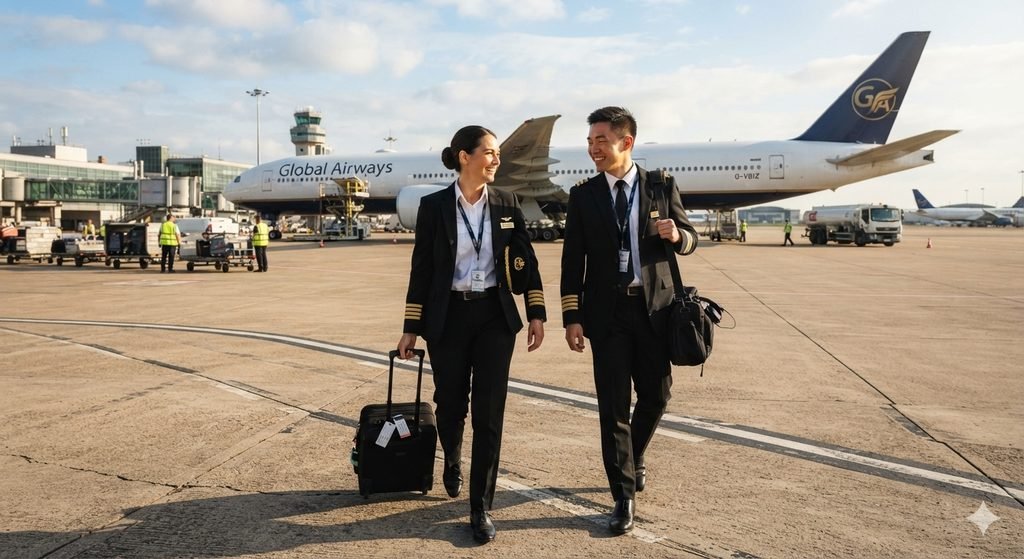
Here’s what most students don’t hear until it’s too late: finishing at the CAAN minimum hours makes you a harder hire, not an easier one. A freshly qualified CPL holder with minimum hours is competing against candidates who’ve spent a year or two building hours as a flight instructor — logging real command time, not just enough to graduate.
This is where visa category quietly decides your entire trajectory.
Why the visa you train under matters more than people realize
Most Nepali students training in the US go in on an M-1 visa — vocational status that allows only limited practical training after graduation (roughly one month of work authorization for every four months studied, capped at six months total). That’s a narrow window to build hours before you have to leave the country.
An F-1 visa, by contrast, opens two real pathways: Curricular Practical Training (CPT) during your program, and Optional Practical Training (OPT) for up to 12 months after. Together, these give F-1 students a meaningfully longer runway — often close to two years — to work as a Certified Flight Instructor (CFI) and build hours toward the 1,000–1,500 range airlines actually look for, instead of walking away at CAAN minimums.
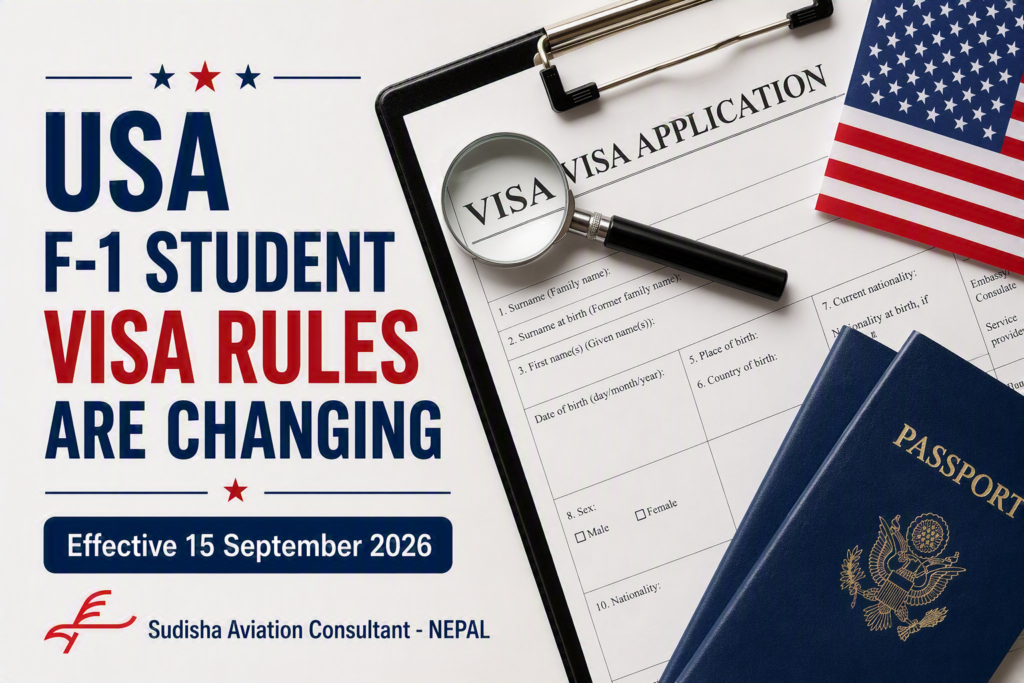
USA F-1 Student Visa Rule Changes 2026 | What Nepalese Aviation Students Need to Know.
To be direct about the limits: OPT and CPT don’t guarantee a CFI job or hours — availability depends on the flight school and the candidate. And OPT eligibility has its own rules (for instance, more than 12 months of full-time CPT can affect OPT eligibility). This is a real, valuable pathway — not a shortcut, and not automatic.
What this means for choosing a school
The single most consequential decision in this whole process isn’t the country — it’s whether your chosen school gives you a genuine way to build hours after your CPL, through a CFI/CFII pathway, and whether your visa category actually supports that.
As of this writing, SAC is currently the only consultancy in Nepal placing students into Hillsboro Aero Academy’s Airplane and Helicopter CPL programs with CFI and CFII progression, structured under the F-1 visa — giving eligible graduates the CPT/OPT hour-building runway described above. Most other pathways available in Nepal today run on M-1 visas, with the shorter practical-training window that comes with it.
This is exactly the conversation we have with every family before they commit to a school — not after they’ve already paid tuition and discovered the visa category limits their options.
Explore the programs
Verify it yourself
We’d rather you check these facts independently than take our word for it:
- Hillsboro Aero Academy — official site
- FAA — official site
- CAAN Nepal — official site
- Boeing 2026 Pilot and Technician Outlook
Have questions specific to your situation?
Every student’s timeline, budget, and visa eligibility is different. Talk to a counsellor → — we’ll walk through what’s actually realistic for you, honestly, before you commit to anything.
Have a question about this topic?
Our team at Sudisha Aviation Consultant is here to help. Reach out via our student enquiry form and we will respond promptly.
Contact SAC