USA F-1 Student Visa Rule Changes 2026 | What Nepalese Aviation Students Need to Know
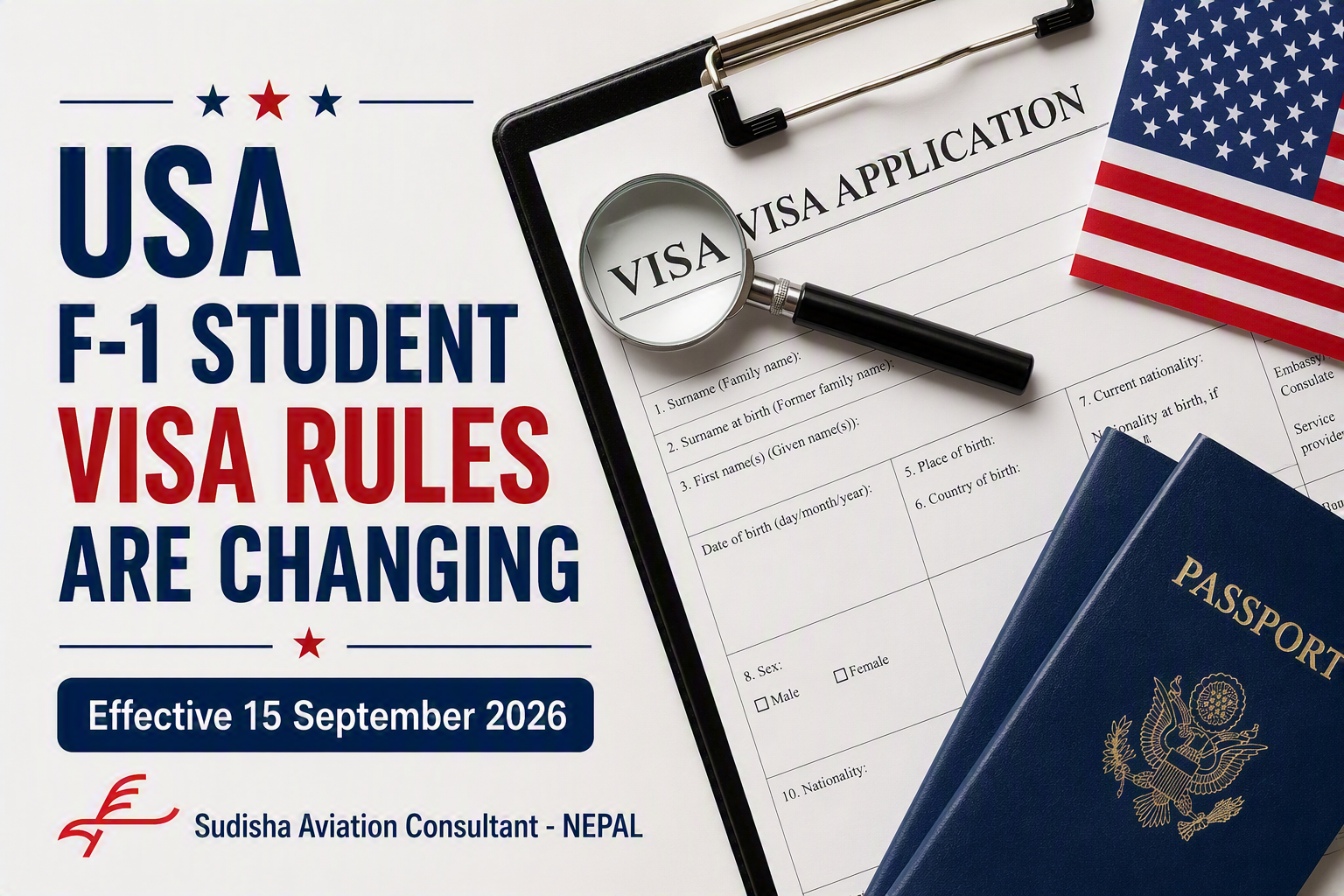
The USA F-1 student visa rules are changing from September 15, 2026. If you're planning to study aviation or become a commercial pilot in the United States, here's what you need to know.
The U.S. Department of Homeland Security (DHS) has announced significant changes to the F-1 Student Visa regulations. These new rules will take effect on 15 September 2026 and will change how long international students are allowed to remain in the United States during their studies.
At SAC, we believe our students deserve clear, reliable information. This article explains what these changes mean and how they may affect future aviation students from Nepal.
What Is Changing?
Until now, most F-1 students were admitted under a system called “Duration of Status (D/S).”
Under this system:
- Students could remain in the U.S. as long as they were enrolled full-time and maintained their student status.
- If flight training took longer than expected due to weather, aircraft maintenance, instructor availability, or other unforeseen circumstances, schools could usually extend the student’s Form I-20 without requiring a separate immigration application.
This flexibility has been particularly helpful for flight training programs, where delays are common.
Beginning 15 September 2026, the Duration of Status (D/S) system will be replaced with a fixed period of admission.
Instead of having an open-ended stay linked to your student status, every F-1 student will receive a specific end date for their authorized stay in the United States.
Why Does This Matter for Flight Training Students?
Unlike many university degree programs, flight training schedules can change.
Training may be delayed because of:
- Bad weather
- Aircraft maintenance
- Instructor availability
- Airspace restrictions
- FAA testing schedules
- Student progress
Previously, these delays were generally easier to manage through an updated I-20.
Under the new rules, students who need additional time may have to submit a formal Extension of Stay (EOS) application to U.S. Citizenship and Immigration Services (USCIS).
Students Will Need to Apply for an Extension
If your training cannot be completed before your authorized stay expires:
- Your school will recommend an extension.
- You must personally apply to USCIS.
- USCIS will decide whether to approve the extension.
The good news is that students who apply correctly and on time are generally allowed to continue studying while their extension application is being processed.
However, this process now involves:
- Additional paperwork
- USCIS processing time
- Government filing fees
This means planning ahead will become more important than ever.
New USCIS Filing Fees
Unlike the previous system, requesting additional time now involves a government application fee.
Based on the current USCIS fee schedule:
- Form I-539 (Application to Extend or Change Nonimmigrant Status) currently costs approximately USD 420 for online filing (fees may change in the future).
Students should always verify the latest fees before submitting an application.
Grace Period After Completing Your Program
Under the previous system, most F-1 students enjoyed a 60-day grace period after completing their studies.
Under the new rules:
- Current students transitioning from the old system generally keep their existing 60-day grace period.
- Students entering under the new system will typically have only a 30-day departure period after their authorized stay ends.
CPT and OPT Remain Available
There is good news for students planning internships or practical training.
The rules for:
- Curricular Practical Training (CPT)
- Optional Practical Training (OPT)
have not changed.
However, if CPT or OPT extends your stay beyond your authorized end date, you may also need to complete the new Extension of Stay process.
Students should begin planning for CPT or OPT well in advance with their school’s international student office.
Changes for Students Switching Flight Programs
Based on the current interpretation of the new regulations, students may no longer be able to switch between Fixed Wing (Aeroplane) and Rotor Wing (Helicopter) flight training after completing one program at the same educational level.
Government agencies are still providing clarification on this point, so additional guidance may follow.
What About Students Already Studying in the USA?
Students who are already enrolled and maintaining their F-1 status generally do not need to take immediate action.
Schools across the United States are currently reviewing individual student records and will advise students if any action is required.
What Should Future Students from Nepal Do?
If you are planning to study aviation in the United States, there is no need to panic.
The United States remains one of the world’s leading destinations for professional pilot training.
The new rules simply mean that students must:
- Plan their training carefully.
- Stay in close contact with their school’s international student office.
- Submit extension applications early if additional training time is required.
- Keep all immigration documents up to date.
Proper planning will be more important than ever.
SAC’s Advice to Students
At SAC, we closely monitor immigration and aviation education updates from our partner institutions and U.S. authorities.
If you are planning to study in the United States, our team will help you understand:
- The latest visa regulations
- Admission requirements
- Flight training timelines
- Documentation requirements
- Pre-departure guidance
- Important immigration updates throughout your application journey
Our goal is to ensure every student begins their aviation career with accurate information and realistic expectations.
This Is a Developing Situation
These regulations were published by the U.S. Department of Homeland Security (DHS) on 17 July 2026 and are scheduled to take effect on 15 September 2026.
Government agencies, including USCIS and the Student and Exchange Visitor Program (SEVP), may issue additional guidance over the coming weeks and months.
SAC will continue monitoring these developments and will provide updated information whenever new official guidance becomes available.
Need Guidance?
If you’re considering studying aviation in the USA and would like to understand how these new rules may affect your plans, our team is here to help.
📞 Contact us through our website or social media channels to discuss your aviation study plans.
Official Resources & References
The information in this article is based on official publications from the U.S. Department of Homeland Security (DHS), the Student and Exchange Visitor Program (SEVP), and U.S. Citizenship and Immigration Services (USCIS). Students who wish to read the complete regulations and guidance can refer to the following official resources:
- Federal Register Final Rule: Federal Register :: Establishing a Fixed Time Period of Admission and an Extension of Stay Procedur
- Study in the States – Quick Guide to the New F-1 Student Visa Rules
- Study in the States – Frequently Asked Questions (FAQ)
- USCIS – Current Filing Fees for Form I-539 (Application to Extend or Change Nonimmigrant Status)
Disclaimer
This article is intended for general informational purposes only and is based on the U.S. Department of Homeland Security’s Final Rule published in July 2026, together with information currently available from U.S. immigration authorities and partner institutions. Immigration policies may change, and individual circumstances vary. Students should always rely on official guidance from U.S. government agencies and their educational institution before making immigration-related decisions.
Have a question about this topic?
Our team at Sudisha Aviation Consultant is here to help. Reach out via our student enquiry form and we will respond promptly.
Contact SAC