Global Pilot Shortage: What It Means for Aspiring Pilots in Nepal
The global aviation industry is short of pilots — and the gap is widening. Boeing’s Pilot & Technician Outlook projects that airlines worldwide will need 674,000 new commercial pilots over the next 20 years. That is not a modest hiring adjustment. It is a structural, decade-long deficit that no combination of accelerated training programmes, salary increases, or regulatory changes has yet resolved.
For aspiring pilots in Nepal, this is not abstract. It shapes where career opportunities exist, what airlines are willing to pay for qualified candidates, and why CAAN’s requirements for COMPASS™ testing and a No Objection Certificate before CPL training represent a gateway into an internationally competitive credential — not merely a bureaucratic hurdle.
The Pilot Shortage by the Numbers
The most authoritative data on the global pilot shortage comes from independent industry analysts:
| Source | Finding | Timeframe |
|---|---|---|
| Boeing Pilot & Technician Outlook (2023) | 674,000 new commercial pilots needed globally | 2023–2043 |
| CAE Aviation (2023) | Industry training 50% fewer pilots than demand requires | Ongoing |
| Oliver Wyman Aviation | Shortage of up to 80,000 pilots by 2032 | 2023–2032 |
| IATA | 4.5 billion passengers forecast by 2040 | Long-term |
The Asia-Pacific region faces the steepest demand. Boeing projects approximately 258,000 new pilots — around 38% of the global total — will be needed in Asia-Pacific alone over the next two decades. Nepal sits within this high-demand zone.
Why the Pilot Shortage Exists
The Retirement Wave
Aviation has an age problem. ICAO mandates retirement at 65 for commercial pilots on international operations, and most national regulators mirror this. Airlines hired heavily in the 1980s and 1990s following deregulation. That generation is now exiting the cockpit at scale — an estimated 10,000–12,000 retirements per year in the US alone, with comparable patterns across Europe and Asia.
Replacing an experienced captain with 10,000+ flight hours takes years of training and line progression. The pipeline cannot accelerate to match the exit rate.
The Training Pipeline Cannot Keep Up
A Commercial Pilot Licence takes a minimum of 18–24 months to complete, and considerably longer when training is interrupted. The cost — typically USD 60,000–100,000 for a full CPL in approved jurisdictions — creates a significant barrier. Flight schools also have finite capacity: aircraft availability, instructor hours, and airspace access all limit how many students can train simultaneously.
Even when demand surges, supply responds slowly by structural necessity.
COVID-19’s Lasting Impact on Supply
The 2020–2021 aviation collapse compressed a decade of normal attrition into 18 months. Airlines globally furloughed or permanently laid off tens of thousands of pilots. A significant proportion of those who took early retirement never returned when demand recovered. Flight schools suspended operations, and student enrolments dropped sharply.
Air travel demand recovered rapidly from 2022 onwards. Pilot supply has not kept pace.
Asia-Pacific’s Structural Growth
South and Southeast Asia are adding commercial passengers faster than any other region. Low-cost carriers are expanding across Indonesia, Vietnam, Thailand, India, and Nepal’s neighbouring markets. Each new aircraft requires roughly four pilots to maintain operational coverage. Fleet growth translates directly and immediately into pilot demand.
What This Means for Nepal Specifically
Nepal’s aviation sector has grown materially in recent years. The opening of Pokhara International Airport in 2023 and expanded operations at Gautam Buddha International Airport in Bhairahawa have increased the country’s connectivity. CAAN-registered carriers are adding routes, and Nepal’s integration with regional aviation markets continues to deepen.
For Nepali pilot candidates, the structural shortage creates three concrete advantages:
International hiring has opened up. Airlines in the Gulf, Southeast Asia, and East Asia are actively recruiting South Asian pilots. A Nepali CPL holder with clean CAAN credentials and a strong COMPASS™ test result is a credible candidate for regional first officer roles.
Salaries have moved significantly. Domestic Nepali carriers typically pay first officers in the NPR 80,000–150,000 per month range. Regional Asian carriers offer USD 3,000–6,000 per month for first officers. Gulf-based carriers can exceed USD 8,000–10,000 per month in total compensation packages. These figures have increased materially since 2022, directly driven by the shortage.
Domestic opportunities are growing. Nepal Airlines, Shree Airlines, Yeti Airlines, and Buddha Air operate expanding fleets. Domestic aviation in Nepal is a legitimate early-career path with genuine progression, not a stepping stone to be skipped.
The CAAN NOC requirement and COMPASS™ assessment, which some candidates view as delays, are gatekeeping mechanisms that protect the credential value of a Nepali CPL. A CAAN-screened, COMPASS™-assessed candidate is verifiably pre-qualified — a distinction that matters to international hiring panels.
Will Automation Replace Pilots?
This question comes up in every conversation about pilot careers. It deserves a direct answer.
Single-pilot operations and autonomous commercial flight have been technically feasible in controlled environments for years. The barriers to implementation are not technical — they are regulatory, liability-related, and passenger-acceptance-related. EASA’s feasibility studies consistently conclude that single-pilot long-haul operations remain decades away from practical deployment, requiring entirely new regulatory frameworks that do not yet exist.
Boeing, CAE, and Oliver Wyman’s 20-year forecasts account for the most optimistic automation scenarios and still project massive pilot deficits. The profession is not at risk of elimination within any career timeframe relevant to a student enrolling in CPL training today.
How to Position Yourself Now
The shortage creates opportunity. These are the practical steps to be positioned to take it:
Complete your COMPASS™ test early. CAAN requires the Ab-Initio COMPASS™ aptitude assessment before clearing any student pilot for CPL training abroad. This cannot be skipped or completed retrospectively. SAC is Nepal’s officially authorised COMPASS™ testing centre — read our complete COMPASS™ guide or contact us to book a session.
Obtain your CAAN NOC. The CAAN No Objection Certificate is the other mandatory pre-departure requirement. Processing times vary — allow adequate lead time before your intended training start date.
Choose a training jurisdiction with strong ICAO alignment. Not all CPL training is equal in international recognisability. The Philippines (CAAP), USA (FAA), South Africa (SACAA), Ireland (IAA), and Australia (CASA) all operate under robust ICAO-aligned frameworks. SAC works with verified schools across all of these countries — explore the Airplane CPL programmes we support.
Understand your pathway to an airline. Ab-initio pipeline programmes hire at 200–250 hours. Standard pathways require 1,500 hours (FAA) or 1,000 hours (EASA). Knowing which pathway your target employer uses determines the right training length and jurisdiction from the outset.
Frequently Asked Questions — Global Pilot Shortage
Is the pilot shortage real, or is it media exaggeration?
The shortage is real and well-documented by independent analysts — Boeing, CAE, Oliver Wyman, and IATA — not just flight schools with a commercial interest in enrolments. The consensus is that the shortage is structural and will persist through the 2030s.
How long will the pilot shortage last?
Current projections suggest the shortage will intensify through the late 2020s as the retirement wave peaks, then gradually ease in the 2030s as training pipelines expand. Boeing’s 20-year deficit of 674,000 implies that even under optimistic training scenarios, demand will exceed supply for at least a decade.
Does the pilot shortage directly affect Nepal?
Yes, in two ways. Nepal-based airlines face the same recruitment challenges as carriers globally — qualified Nepali pilots can command better terms. And internationally trained Nepali CPL holders are in demand from carriers across Asia and the Gulf, because the qualified candidate pool relative to regional aircraft orders is structurally thin.
Will drones or autonomous aircraft make pilot careers obsolete?
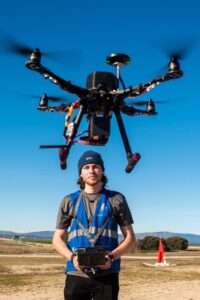
Not within any career horizon relevant to today’s training decisions. EASA’s own feasibility studies confirm that commercial autonomous operations at scale remain decades away. The 20-year shortage forecasts specifically account for automation and still project large pilot deficits.
What salary can a Nepali pilot realistically expect?
It depends heavily on carrier, route network, and seniority. Domestic Nepal first officers: roughly NPR 80,000–150,000 per month. Regional Asian carriers: USD 3,000–6,000 per month. Gulf carriers: USD 8,000–10,000+ per month in full compensation packages. Speak to SAC’s advisors for current market intelligence on specific countries and carriers.
Aspiring pilots in Nepal are entering the profession at a structurally advantageous moment. The shortage is not a short-term hiring spike — it is a 20-year gap in the global aviation workforce, concentrated in the Asia-Pacific region. The regulatory steps CAAN requires — the COMPASS™ test, the NOC, the approved training pathway — are not barriers. They are the foundation of a credential that international airlines take seriously.
If you are considering a pilot career, the right time to start the process is not when you feel ready. It is now, while the conditions that favour newly qualified pilots are at their strongest in a generation.
Related reading: The Future of Aircraft Maintenance: 5 Jobs That Will Soar — the same demand shift is reshaping maintenance careers.
Have a question about this topic?
Our team at Sudisha Aviation Consultant is here to help. Reach out via our student enquiry form and we will respond promptly.
Contact SAC