
FAA + EASA Joint CPL Program: Why This Dual Licence Beats a Single Licence
This guide breaks down HAA’s FAA EASA CPL joint program in full. If you’re choosing between a standard FAA-only CPL and a joint FAA+EASA program, the question isn’t really “which is cheaper” — it’s “which license actually gets me hired.” Here’s the honest breakdown.
What the FAA EASA CPL Joint Program Actually Is
Hillsboro Aero Academy (HAA), through its partnership with Austria-based RotorSky, is the only flight school in the US offering both F-1 visa sponsorship and EASA-certified training for both airplane and helicopter students, in one location, under one program.
What’s included:
- Full FAA Professional Pilot Program — PPL, Instrument Rating, Commercial Pilot Certificate, CFI, CFII, and Multi-Engine Instructor Rating
- EASA CPL with ATPL credit, EASA Multi-Engine Piston Instrument Rating (MEP IR)
- Full credit toward EASA Airline Transport Pilot (ATPL) Theory
Why It Costs More — and What You’re Actually Paying For
Based on HAA’s 2027 published rates, here’s the full cost breakdown for the joint program:
Airplane Program (FAA + EASA):
- Flight Training (FAA + EASA): $102,754
- EASA Program Fee: €10,500
- Miscellaneous (visa, medical, governmental fees): $8,220 + €7,086
- Grand Total (estimate): $119,489
Helicopter Program (FAA + EASA):
- Flight Training (FAA + EASA): $96,450
- EASA Program Fee: €9,850
- Miscellaneous (visa, medical, governmental fees): $4,330 + €3,245
- Grand Total (estimate): $115,245
Figures from HAA’s official 2027 rate sheets. Rates are subject to change — for the latest confirmed pricing, contact SAC or check directly with HAA
The Real Reason This Matters: What Happens Without It
This is the part most comparisons skip. An FAA-only license is not automatically valid for commercial flying in Europe:
- Since 2022, pilots residing in an EASA member state must hold an EASA license to fly — even on US-registered (N-reg) aircraft
- Converting an FAA license to EASA after the fact typically requires passing all 14 EASA ATPL theory exams, an EASA medical, and a skills test — commonly a year or more of additional work
- A temporary validation route (TIP-L) exists, but it’s capped at private-pilot privileges only, expires after 5 years, and cannot be used for paid commercial flying
In other words: an FAA-only pilot who later wants a European airline job is doing the EASA program anyway — just later, slower, and separately. The joint program front-loads that work while you’re already in training, instead of bolting it on afterward at a higher real cost in time and money.
Why This Is a Job-Search Advantage, Not Just a Credential
- You qualify for both US and EU hiring pools from day one — most FAA-only graduates can only apply to US/FAA-aligned carriers until they separately convert.
- EASA’s Frozen ATPL pathway lets you apply for First/Second Officer roles at just 200 hours — far earlier than typical FAA-only progression, since the FAA has no equivalent frozen ATPL concept.
- Recruiters read dual certification as reduced onboarding cost — an airline hiring a dual-rated pilot doesn’t need to sponsor or wait on a later conversion.
- It signals seriousness — completing the harder, more expensive path during training is a legitimate differentiator against otherwise-similar CPL candidates.
Who Should Consider This Program
This program fits students who:
- Want to keep both US and European airline employers genuinely open as career options.
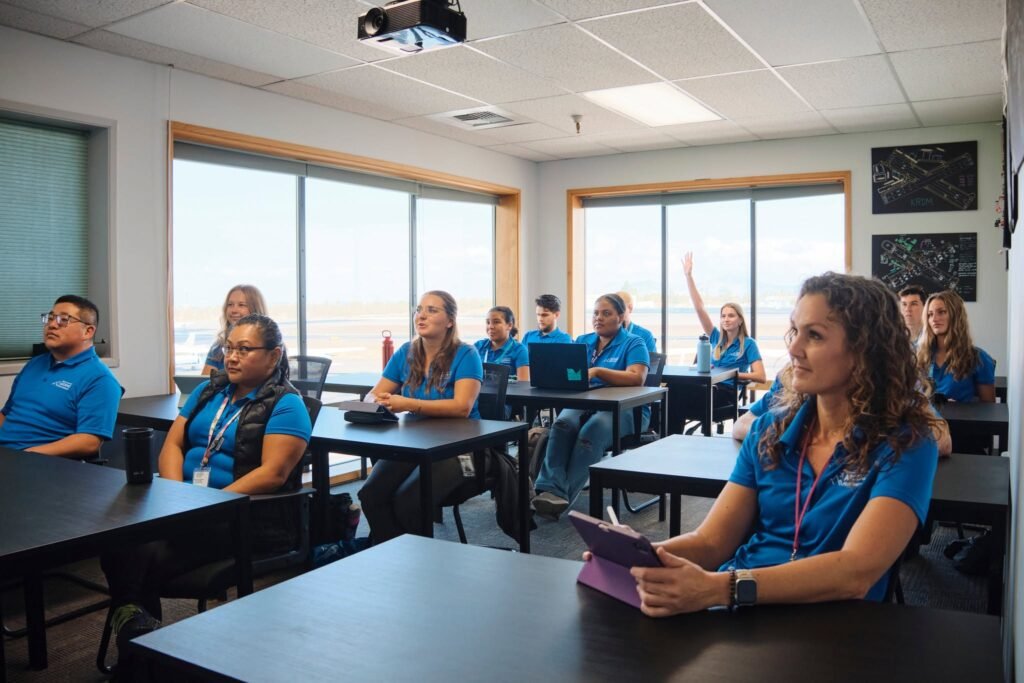
- Can commit to a longer, more intensive program (18–21+ months, per HAA’s published estimates).
- Have the financial capacity for the added EASA component on top of standard FAA training costs.
It’s a deliberate investment in optionality — not the right fit if your career goal is narrowly US-based from the start.
Explore the Programs
Verify This Yourself
Questions About Whether This Fits Your Goals?
Every student’s career plans, timeline, and budget are different. Talk to a counsellor — we’ll walk through whether the dual-licence path is the right call for you, honestly, before you commit.
Have a question about this topic?
Our team at Sudisha Aviation Consultant is here to help. Reach out via our student enquiry form and we will respond promptly.
Contact SAC